
SEC News

Renewables Deliver Big Wins: Smart Energy Council Welcomes Up to 20% Drop in Power Bills

The Smart Energy Council (SEC) warmly welcomes cost-of-living relief for Australians in the form of lower power bills.

SEC Chief Executive David McElrea said today’s default market offer from the Australian Energy Regulator clearly demonstrates that the more renewable energy we can generate, the greater the savings for Australian households.

“Half of our electricity needs are now being met by renewable energy. The result is lower power bills for millions of homes and businesses,” he said.

“The Smart Energy Council has long championed the role of solar and batteries as a key driver of lower energy costs.”

“It’s no coincidence that with rooftop solar now generating more electricity than Australia’s entire fleet of coal generators, we are seeing energy costs going down.

“What was once a niche industry has now become Australia’s most dominant source of power generation, lowering energy costs for millions of homes and businesses.”

Renewable energy is now generating half of our electricity needs, and prices are tumbling as a direct result of this clean energy transition.

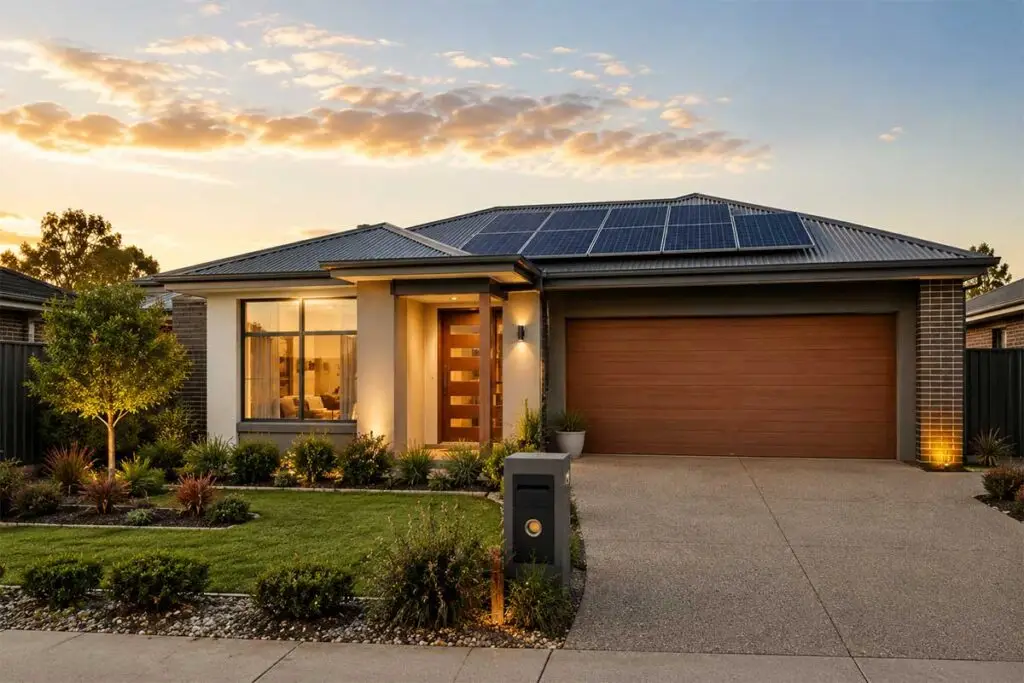
“Australia’s four million solar households already know that solar saves money,” Mr McElrea said.

“Solar and batteries are doing the heavy lifting in our energy system, slashing wholesale electricity prices and shielding families from the volatile fossil fuel markets that drive up bills.”

“But we cannot stop here. To lock in these savings permanently and protect more Australians from cost-of-living pressures, we must maintain our support for home batteries and solar while accelerating the rollout of large-scale renewable generation and storage, and make sure every household – including renters and apartment dwellers – can access the benefits of rooftop solar and batteries.”

The Smart Energy Council notes increasing power bill risks remain, particularly in the form of rising network costs, and urges federal and state governments to carefully assess how these fees are being passed on to consumers.

-ENDS-

Media Contact

Email: media@smartenergy.org.au
Phone: +61 448 972 192
Website: www.smartenergy.org.au

About the Smart Energy Council

The Smart Energy Council is the peak independent membership body representing Australia’s renewable energy industry. We are a not-for-profit organisation and registered charity, advocating on behalf of our members and the wider industry for strong energy policy, increased investment, energy security and sustainable industry growth. Our work spans residential, commercial and industrial distributed energy resources (DER), including solar PV and battery storage, rooftop solar, electrification, electric vehicles and smart transport, renewable manufacturing, large-scale renewable energy, electricity grid development and emerging energy technologies. We represent our members’ interests nationally and internationally, including across the Asia-Pacific region.

If your organisation operates in the renewable energy sector, become a member to support our work, strengthen our collective voice and help shape the industry’s future.  

Join renewable energy leaders at our conferences, exhibitions and networking events. Explore upcoming events.  

Share on socials

Related Posts

Smart Energy Council thanks Barbara Elliston for two decades of board service

Smart Energy Council welcomes Lisa Marsh to the Board

Smart Stewardship

Chair: Darren Johannesen

Meeting Frequency: Every 12 Weeks

Sector Scope

  • Recyclers
  • PV Manufacturers
  • Product stewardship participants

Policy Scope

  • Stewardship policy
  • Recycling frameworks
  • Circular economy initiatives

Technology Scope

  • Solar
  • Batteries

Topics Scope

  • Recycling pathways
  • Product stewardship schemes
  • End-of-life management
  • Industry obligations
  • Sustainability initiatives

Smart Global

Chair: Richard Neumann

Meeting Frequency: Third Monday of every second month except December

Sector Scope

  • Importers
  • Exporters
  • Investors
  • International project managers

Policy Scope

  • International trade
  • Market entry
  • Export facilitation
  • Tariff and non-tariff barriers

Technology Scope

  • Smart energy technologies
  • Climate technologies

Topics Scope

  • Renewable Energy Council Asia Pacific
  • Export opportunities
  • Trade missions
  • Trade and investment agreements
  • Green Economy agreements
  • Global Climate
  • International partnerships
  • Investment opportunities

Smart Transport

Chair: Rhiannon Evans

Meeting Frequency: Every 12 Weeks

Sector Scope

  • Transport technology providers
  • Light and Heavy Electric Fleet operators
  • Charging infrastructure businesses

Policy Scope

  • EV policy
  • Charging infrastructure
  • Transport electrification
  • Network integration
  • Incentives 

Technology Scope

  • Electric vehicles
  • Charging infrastructure
  • Fleet technologies
  • Distribution Network

Topics Scope

  • Rapid Expansion
  • Interconnections
  • Regulations and Standards
  • V2X

Smart Manufacturing

Chair: Rod Scott

Meeting Frequency: Every 12 Weeks

Sector Scope

  • Local manufacturers
  • Technology developers
  • Component suppliers
  • Emerging technologies

Policy Scope

  • Supply Chain
  • R&D
  • Manufacturing Incentives
  • CEFC

Technology Scope

  • Solar
  • Storage
  • Electronics
  • Software
  • Critical materials

Topics Scope

  • Expanding local manufacturing
  • Export opportunities
  • Supply chains
  • Local content
  • Investment attraction
  • Industry capability

Smart Large-scale

Chair: John Welch

Meeting Frequency: Every 8 Weeks

Sector Scope

  • Large & utility scale developers
  • Asset owners
  • Investors
  • EPCs

Policy Scope

  • NEM Review
  • Capacity Investment Scheme
  • Planning Regulation

Technology Scope

  • Solar
  • Storage
  • Wind
  • Transmission

Topics Scope

  • Interconnection
  • Development
  • Financing
  • Energy Wholesaling
  • Planning Regulation

Smart Consumer

Chair: Sohaib Mohammed

Meeting Frequency: Every 8 Weeks

Sector Scope:

  • Installers
  • Retailers
  • Wholesales
  • Service providers

Policy Scope

  • Consumer Energy Resources (CER) Rebate programs
  • Accreditation
  • Local regulations

Technology Scope

  • Solar
  • Battery storage
  • Energy retail
  • Distributed network technologies

Topics Scope

  • Compliance obligations
  • Training and workforce issues
  • Regulations 
  • Consumer protection
  • Energy retail developments
  • Virtual Power Plants (VPP)
  • Industry best practice

Contact Thornton de Voy

Contact Yuan Fang

Contact Ivan Chelvathurai

Contact Nigel Morris

Contact Charlie Caruso

Contact Allen Edwards

Contact Darren Johannesen

Contact Jessica Hampshire