
SEC News

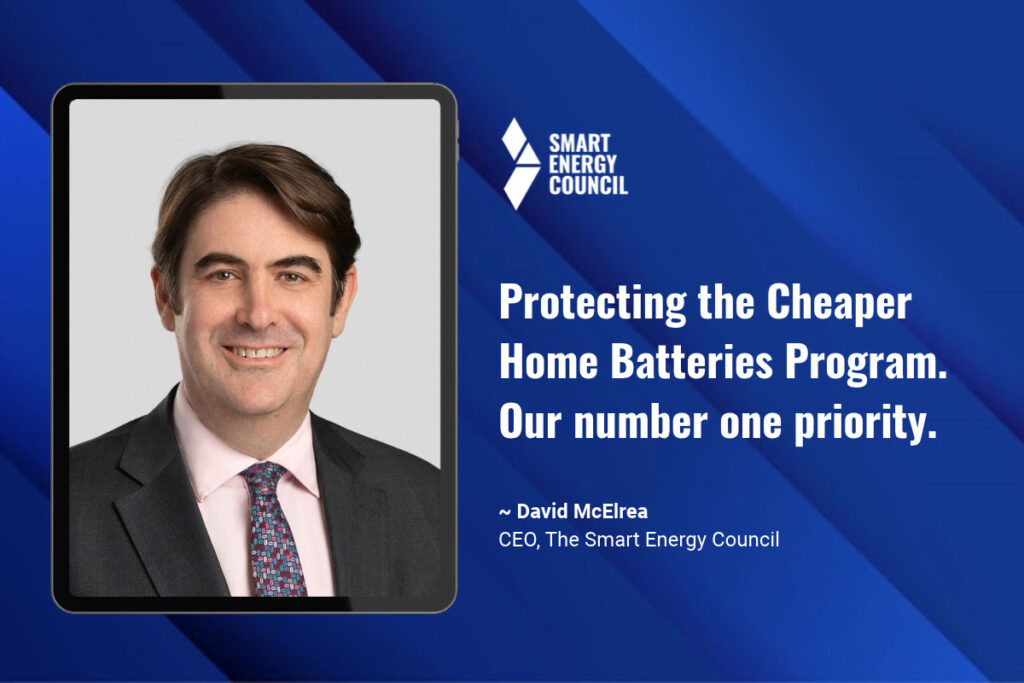
Protecting the Cheaper Home Batteries Program is Smart Energy Council’s No.1 priority, says David McElrea

A statement from David McElrea, CEO of The Smart Energy Council

There has been intense media speculation in recent days about the future of the Cheaper Home Batteries Program. Let’s get a few facts straight.

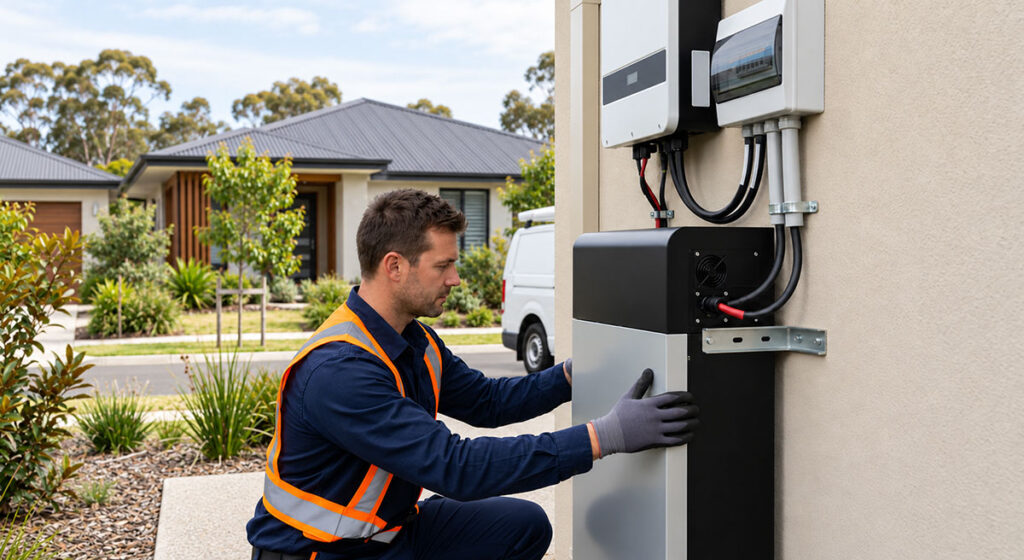
The program has been extraordinarily successful, rolling out more than 600,000 batteries in a little over a year. It’s helping Australians with the cost of living, bringing down electricity prices, giving households greater control over their energy, strengthening Australia’s energy security and reducing dangerous climate pollution.

As the most recent AEMO report shows, batteries set the wholesale price in almost half of dispatch intervals in the National Electricity Market during the September quarter. Average NEM wholesale prices have fallen by nearly a third compared with the same quarter last year, with batteries playing an important role in that reduction. By charging during the day and discharging during the evening peak, batteries are helping flatten the duck curve.

There have been few government programs that have achieved so much in so little time for relatively modest public investment. This is a co-investment between households and government, with benefits reaching well beyond households with batteries. It’s making a huge difference at a time of intense cost-of-living pressures.

Having said that, as we saw last year, the extraordinary popularity of solar and batteries can mean demand runs too hot. That reflects the excellent value they offer Australian households. We don’t want another solar coaster or battery coaster, with the damaging boom-and-bust cycles we’ve seen in the past. We are a responsible industry, here for the long term, committed to providing high-quality products and services to Australian households and businesses.

There is, however, a fundamental difference between responsibly managing a successful program and abandoning it altogether. That’s why the Liberals’ commitment to get rid of it is so disappointing.

The Smart Energy Council will continue working closely with government to protect the program, maintain confidence in the industry and ensure more Australians enjoy the benefits of solar and storage. Our members know that protecting the Cheaper Home Batteries Program is our number one priority as an organisation. We will keep working hard to represent their interests and ensure Australian households and businesses can continue to benefit from this remarkable program.

ENDS

Media Contact

Email: media@smartenergy.org.au
Phone: +61 448 972 192
Website: www.smartenergy.org.au

About the Smart Energy Council

The Smart Energy Council is the peak independent membership body representing Australia’s renewable energy industry. We are a not-for-profit organisation and registered charity, advocating on behalf of our members and the wider industry for strong energy policy, increased investment, energy security and sustainable industry growth. Our work spans residential, commercial and industrial distributed energy resources (DER), including solar PV and battery storage, rooftop solar, electrification, electric vehicles and smart transport, renewable manufacturing, large-scale renewable energy, electricity grid development and emerging energy technologies. We represent our members’ interests nationally and internationally, including across the Asia-Pacific region.

If your organisation operates in the renewable energy sector, become a member to support our work, strengthen our collective voice and help shape the industry’s future.  
Related Posts

Smart Energy Council Welcomes WA’s Historic 75% Renewable Energy Target

This is a cost-of-living scheme, not climate politics: Renewable energy industry dismayed by Coalition plan to axe Cheaper Home Batteries Program

Contact Ben Lai

Smart Stewardship

Chair: Darren Johannesen

Meeting Frequency: Every 12 Weeks

Sector Scope

  • Recyclers
  • PV Manufacturers
  • Product stewardship participants

Policy Scope

  • Stewardship policy
  • Recycling frameworks
  • Circular economy initiatives

Technology Scope

  • Solar
  • Batteries

Topics Scope

  • Recycling pathways
  • Product stewardship schemes
  • End-of-life management
  • Industry obligations
  • Sustainability initiatives

Smart Global

Chair: Richard Neumann

Meeting Frequency: Third Monday of every second month except December

Sector Scope

  • Importers
  • Exporters
  • Investors
  • International project managers

Policy Scope

  • International trade
  • Market entry
  • Export facilitation
  • Tariff and non-tariff barriers

Technology Scope

  • Smart energy technologies
  • Climate technologies

Topics Scope

  • Renewable Energy Council Asia Pacific
  • Export opportunities
  • Trade missions
  • Trade and investment agreements
  • Green Economy agreements
  • Global Climate
  • International partnerships
  • Investment opportunities

Smart Transport

Chair: Rhiannon Evans

Meeting Frequency: Every 12 Weeks

Sector Scope

  • Transport technology providers
  • Light and Heavy Electric Fleet operators
  • Charging infrastructure businesses

Policy Scope

  • EV policy
  • Charging infrastructure
  • Transport electrification
  • Network integration
  • Incentives 

Technology Scope

  • Electric vehicles
  • Charging infrastructure
  • Fleet technologies
  • Distribution Network

Topics Scope

  • Rapid Expansion
  • Interconnections
  • Regulations and Standards
  • V2X

Smart Manufacturing

Chair: Rod Scott

Meeting Frequency: Every 12 Weeks

Sector Scope

  • Local manufacturers
  • Technology developers
  • Component suppliers
  • Emerging technologies

Policy Scope

  • Supply Chain
  • R&D
  • Manufacturing Incentives
  • CEFC

Technology Scope

  • Solar
  • Storage
  • Electronics
  • Software
  • Critical materials

Topics Scope

  • Expanding local manufacturing
  • Export opportunities
  • Supply chains
  • Local content
  • Investment attraction
  • Industry capability

Smart Large-scale

Chair: John Welch

Meeting Frequency: Every 8 Weeks

Sector Scope

  • Large & utility scale developers
  • Asset owners
  • Investors
  • EPCs

Policy Scope

  • NEM Review
  • Capacity Investment Scheme
  • Planning Regulation

Technology Scope

  • Solar
  • Storage
  • Wind
  • Transmission

Topics Scope

  • Interconnection
  • Development
  • Financing
  • Energy Wholesaling
  • Planning Regulation

Smart Consumer

Chair: Sohaib Mohammed

Meeting Frequency: Every 8 Weeks

Sector Scope:

  • Installers
  • Retailers
  • Wholesales
  • Service providers

Policy Scope

  • Consumer Energy Resources (CER) Rebate programs
  • Accreditation
  • Local regulations

Technology Scope

  • Solar
  • Battery storage
  • Energy retail
  • Distributed network technologies

Topics Scope

  • Compliance obligations
  • Training and workforce issues
  • Regulations 
  • Consumer protection
  • Energy retail developments
  • Virtual Power Plants (VPP)
  • Industry best practice

Contact Thornton de Voy

Contact Yuan Fang

Contact Ivan Chelvathurai

Contact Nigel Morris

Contact Charlie Caruso

Contact Darren Johannesen

Contact Jessica Hampshire