
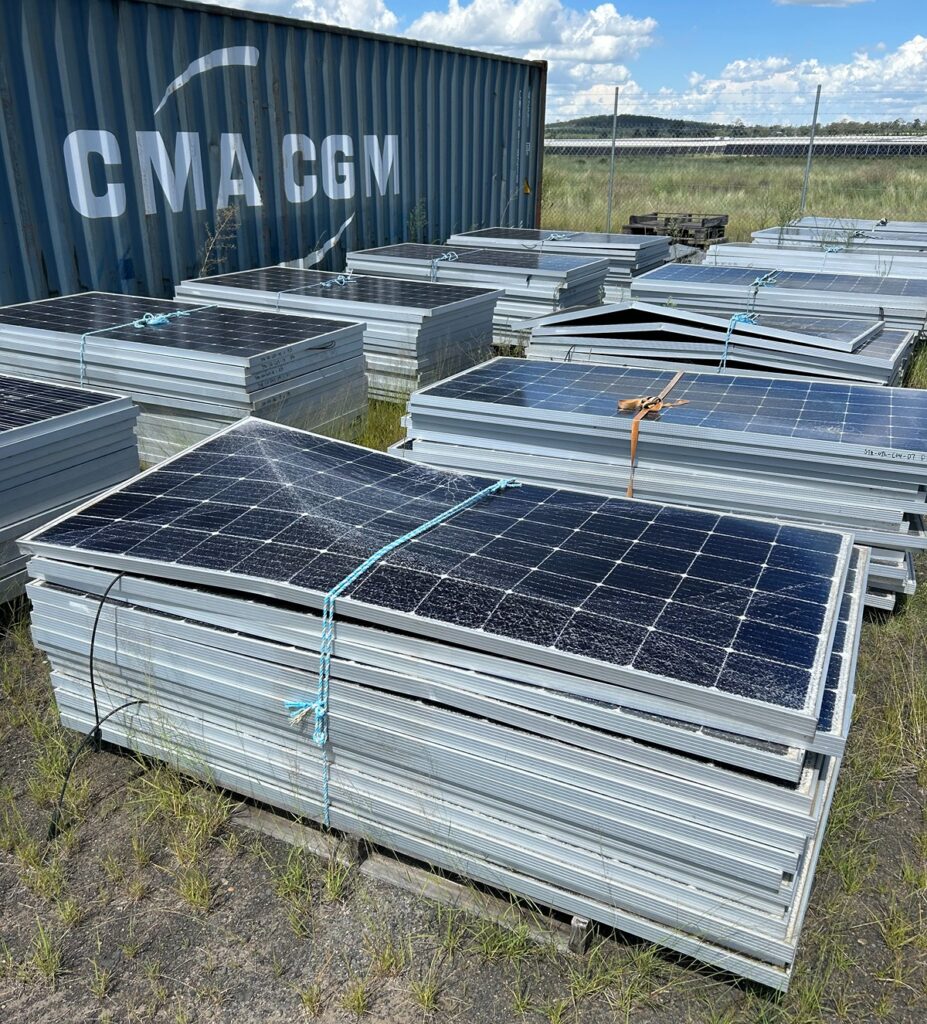
The Smart Energy Council (SEC) has today welcomed the landmark outcomes of the Environment Ministers’ Meeting, hailing the formal endorsement of a Regulatory Impact Statement (RIS) as a definitive step toward a national, mandatory product stewardship scheme for solar PV panels.
We particularly welcome the commitment to having end-of-life options in place by the end of 2027.
The SEC commends the leadership shown by the Federal and New South Wales Governments in championing a regulated approach.
This progress aligns directly with the Productivity Commission’s recommendations and the recent Joint Statement supported by over 60 industry, environmental, and community organisations.
Quotes attributable to John Grimes, Chief Executive Officer, Smart Energy Council:
“Today’s communique from the Environment Ministers is a significant victory for the renewable energy sector. It validates what the industry has advocated for years: a national, mandatory framework is the only viable way to manage solar waste and secure our critical minerals. The RIS proves beyond doubt that this action is of net economic benefit to Australia.”
“We strongly applaud the decision for NSW to lead the interjurisdictional working group. We have the policy alignment; what we need now is the final roadmap to ensure solar panels are kept out of landfills and processed through a world-class domestic recycling industry.”
“While this working group is a massive step forward, industry cannot invest millions in capital infrastructure on an open-ended process. To prevent a backlog of panels in landfills and protect our growing recycling sector, we are calling on the working group to act swiftly and recommend a firm, legislated commencement date of July 1, 2027.”
Quotes attributable to Darren Johannesen, Executive General Manager – Sustainability, Smart Energy Council:
“The progress made by Ministers today brings us much closer to a functional circular economy. We are thrilled to see the Ministers explicitly recognise the learnings from our Queensland pilot programs, which proved that Australia possesses the world-class technology to recover high-value silver, copper, and silicon from our rooftops.”
“The barrier to scaling these operations isn’t technology—it is policy certainty. While we note the Ministers’ discussions regarding other technologies, the priority must remain a dedicated, functional national scheme for solar PV.”
“We also strongly welcome the agreement to consider options for a battery energy storage scheme.”
“We are moving in the right direction, but the industry needs a clear mandate to reach commercial scale. We look forward to working closely with the NSW-led working group to finalise the timeline and break the cycle of ‘no feedstock, no scale’, so we can secure our domestic recycling capability once and for all.”
-ENDS-
Media Contact
Email: media@smartenergy.org.au
Phone: +61 448 972 192
Website: www.smartenergy.org.au
About the Smart Energy Council
The Smart Energy Council is the peak independent membership body representing Australia’s renewable energy industry. We are a not-for-profit organisation and registered charity, advocating on behalf of our members and the wider industry for strong energy policy, increased investment, energy security and sustainable industry growth. Our work spans residential, commercial and industrial distributed energy resources (DER), including solar PV and battery storage, rooftop solar, electrification, electric vehicles and smart transport, renewable manufacturing, large-scale renewable energy, electricity grid development and emerging energy technologies. We represent our members’ interests nationally and internationally, including across the Asia-Pacific region.
If your organisation operates in the renewable energy sector, become a member to support our work, strengthen our collective voice and help shape the industry’s future.
Share on socials