
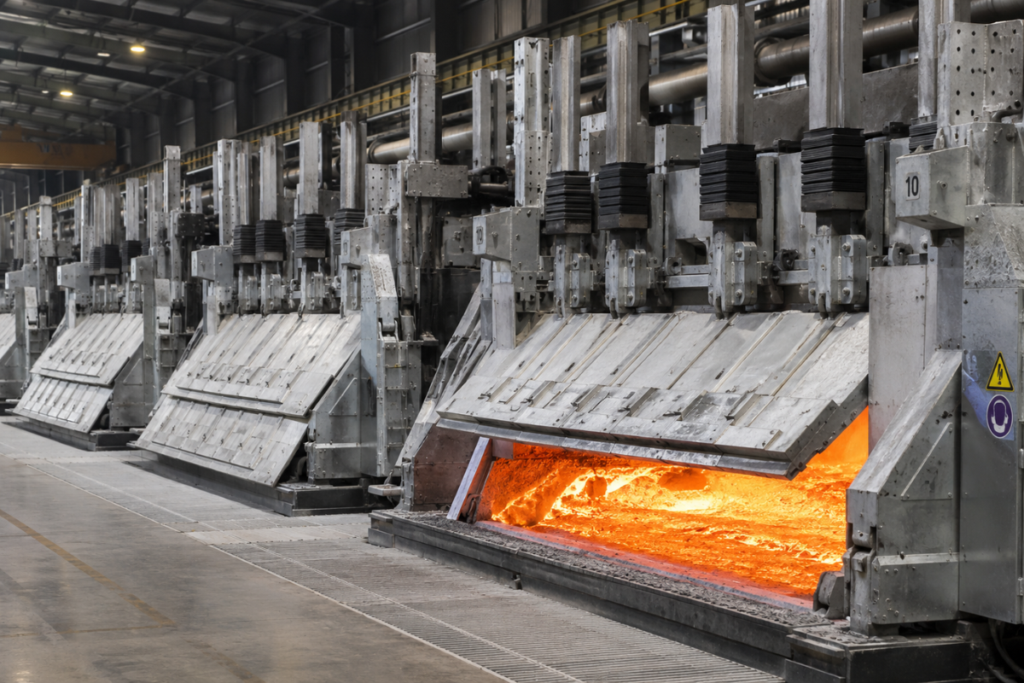
The Smart Energy Council (SEC) has strongly welcomed the joint agreement between the Australian Government and NSW Government to safeguard the future of the Tomago Aluminium smelter through a long-term clean energy package.
Under the package, cheap, reliable renewable energy will protect over 1,000 direct heavy-industry jobs in the Hunter region while driving billions of dollars in new clean energy and storage investments across New South Wales.
Smart Energy Council Chief Executive Officer David McElrea said the deal demonstrates how decarbonisation can and is strengthening Australia’s industrial foundation.
“This is what combining a Future Made in Australia and taking climate action looks like in practice,” Mr McElrea said.
“Delivering for regions, workers, industry, and the environment simultaneously, this package offers genuine long-term security to workers and local communities across Newcastle, Port Stephens and the Hunter who form the backbone of our manufacturing economy.”
As Australia’s largest single electricity consumer, securing a renewable energy supply for the Tomago smelter is critical to underwriting new solar, wind, and firming storage capacity, accelerating Australia’s transition toward its national renewable energy and emission reduction targets.
“Powering the Tomago smelter with clean, locally-produced energy into the future is crucial to providing true industrial sovereignty,” Mr McElrea said.
“It ensures our nation retains its heavy manufacturing capability and locks in supply chain resilience against global economic disruptions. We cannot afford to export our industrial capability overseas when we have the best solar and wind resources in the world right here.”
The agreement aligns directly with the Federal Government’s Future Made in Australia strategy, positioning Australian heavy industry to compete in a rapidly decarbonising global economy.
“Retaining our renewable-powered industrial base here in Australia is crucial to securing jobs and anchoring our place at the center of the growing global green metals supply chain,” Mr McElrea added.
“By contracting new clean energy supply to the smelter, this agreement will enable billions of dollars of investment into renewable generation and energy storage. That investment will drive massive cuts to carbon pollution while cementing NSW as a global clean energy powerhouse.”
“This is a significant step forward in realising the Future Made in Australia vision – delivering low-cost clean energy to drive our domestic industrial base today, tomorrow, and for decades to come,” Mr McElrea concluded.
The Smart Energy Council calls on all levels of government and industry to continue accelerating the rollout of renewable energy infrastructure and transmission to ensure Australian industry remains globally competitive.
Media Contact
Email: media@smartenergy.org.au
Phone: +61 448 972 192
Website: www.smartenergy.org.au
About the Smart Energy Council
The Smart Energy Council is the peak independent membership body representing Australia’s renewable energy industry. We are a not-for-profit organisation and registered charity, advocating on behalf of our members and the wider industry for strong energy policy, increased investment, energy security and sustainable industry growth. Our work spans residential, commercial and industrial distributed energy resources (DER), including solar PV and battery storage, rooftop solar, electrification, electric vehicles and smart transport, renewable manufacturing, large-scale renewable energy, electricity grid development and emerging energy technologies. We represent our members’ interests nationally and internationally, including across the Asia-Pacific region.
If your organisation operates in the renewable energy sector, become a member to support our work, strengthen our collective voice and help shape the industry’s future.
– ENDS –
Share on socials