
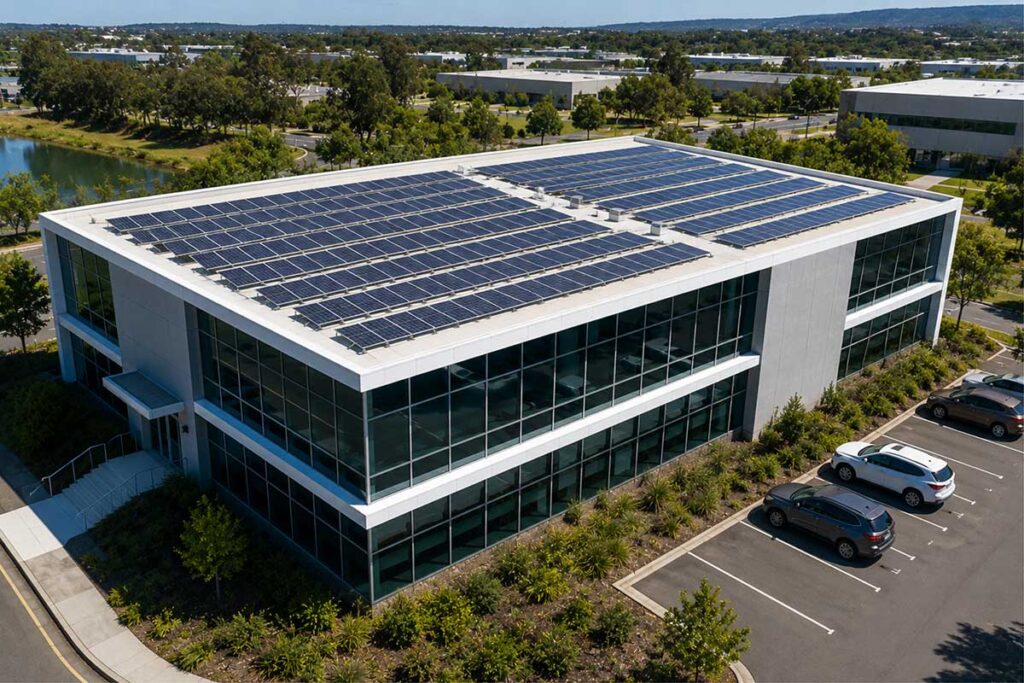
Unlocking solar power on Australia’s commercial and industrial rooftops could generate energy equivalent to 10 of the nation’s largest coal-fired power stations, according to a new report from the Smart Energy Council.
The report, Unlocking the Missing Middle, reveals that while Australia leads the world in residential solar and large-scale renewable farms, medium-sized commercial operations such as factories, warehouses, farms, and cold storage facilities are being stalled by outdated regulations, slow grid approvals, collapsed rebates, and landlord-tenant disputes.
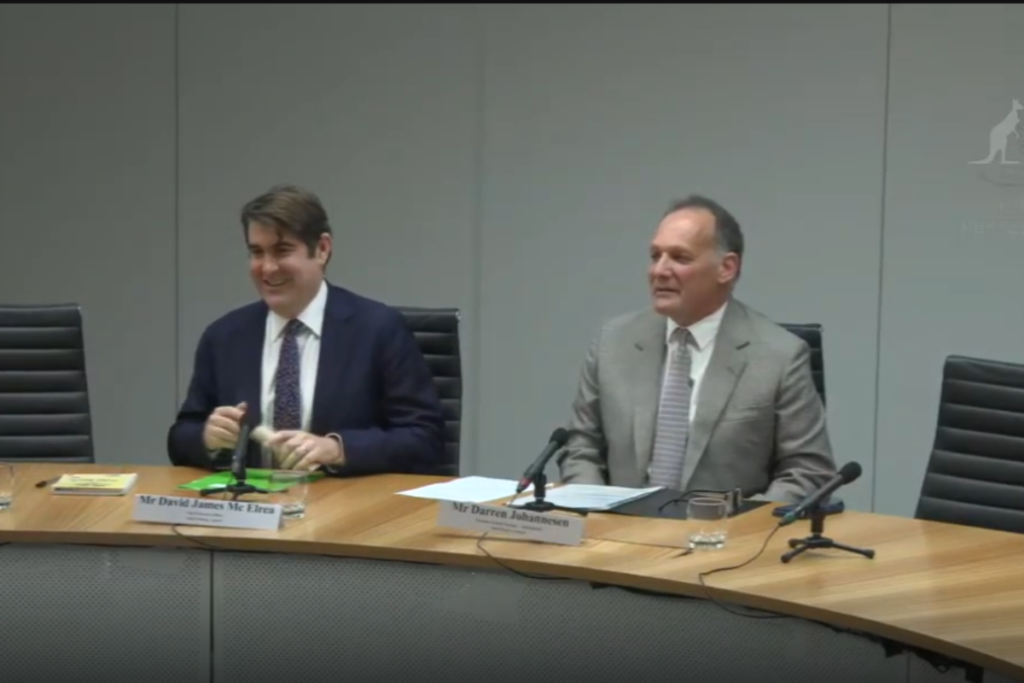
“Australia is sitting on a rooftop power station the size of ten coal plants. It is time we switched it on,” Smart Energy Council CEO David McElrea said.
“We are engineering under-investment into our own clean energy switch, one big rooftop at a time.”
The “Missing Middle” Problem
Based on a review of over 80 studies, a survey of 61 industry members, and 10 expert interviews, the report identifies key roadblocks driving commercial under-investment:
-
- Approval Delays: 71% of survey respondents cited slow sign-offs from network companies as a major barrier, with grid connection approvals taking up to five months instead of the standard 10 business days.
-
- Rebate Collapse & System Limits: Federal rebate values for commercial-scale systems have plunged from $20 – $30 down to just $3 – $4. Furthermore, because support caps out at 100 kW, larger businesses are routinely advised to downsize systems, leaving massive savings on the table.
-
- Lease Sticking Points: Nearly 75% of respondents identified tenant-landlord cost sharing as a major hurdle. In one case, a cold storage tenant who installed their own solar panels was billed by their landlord for the power generated, driving $12,000 in legal fees before installation.
-
- Unfavourable Network Pricing: 98% of respondents said current network pricing fails to properly reward businesses for investing in battery and solar storage.
Five Key Solutions
The Smart Energy Council is calling on Minister for Climate Change and Energy, Chris Bowen, to establish a national taskforce within six months to implement five practical fixes:
-
- Fast-track network approvals and strictly enforce connection deadlines.
-
- Reform network pricing to provide long-term investment certainty.
-
- Restore rebate support and raise system-size caps above 100 kW.
-
- Standardise lease models to seamlessly share costs and benefits between landlords and tenants.
-
- Mandate public grid data so developers know network capacity before investing.
Impact Scenario: What Raising the Rebate Cap Means on the Ground
Under the current 100 kW cap, a small warehouse and a massive distribution center receive the exact same maximum upfront benefit (approx $26,000). Raising the threshold to 1 MW unlocks dramatic scale:
| Building Type | Approx. Roof Space | System Size (Under 1MW Threshold) | Estimated Annual Bill Savings | Additional Rebate vs Today’s Cap |
| Small Warehouse | 1,050 m² | 150 kW | $45,000 / yr | +$13,000 |
| Large School Campus | 1,750 m² | 250 kW | $75,000 / yr | +$39,000 |
| Supermarket / Bulky Goods | 3,500 m² | 500 kW | $150,000 / yr | +$104,000 |
| Logistics & Shopping Centres | 9,000–11,000 m²* | 1,000 kW (1 MW) | $300,000 / yr | +$234,000 |
*Figures capped at 1 MW based on report recommendations. Estimates are illustrative based on standard industry assumptions (1 kW per 7m², ~$260 rebate/kW, 1,500 kWh/kW generation).
Spokespeople Available for Interview:
-
- David McElrea: CEO, Smart Energy Council
-
- Robert Potter: Head of Policy and Advocacy, Smart Energy Council (Report Author)
-
- Case studies and solar installers available upon request.
DOWNLOAD THE REPORT HERE: https://bit.ly/4vWI6A0
Media Contact
Email: media@smartenergy.org.au
Phone: +61 448 972 192
Website: www.smartenergy.org.au
About the Smart Energy Council
The Smart Energy Council is the peak independent membership body representing Australia’s renewable energy industry. We are a not-for-profit organisation and registered charity, advocating on behalf of our members and the wider industry for strong energy policy, increased investment, energy security and sustainable industry growth. Our work spans residential, commercial and industrial distributed energy resources (DER), including solar PV and battery storage, rooftop solar, electrification, electric vehicles and smart transport, renewable manufacturing, large-scale renewable energy, electricity grid development and emerging energy technologies. We represent our members’ interests nationally and internationally, including across the Asia-Pacific region.
If your organisation operates in the renewable energy sector, become a member to support our work, strengthen our collective voice and help shape the industry’s future.
Share on socials