
The Smart Energy Council (SEC) has strongly welcomed the announcement by Minister for Climate Change and Energy, Chris Bowen, to raise the Small-scale Renewable Energy Scheme (SRES) eligibility cap from 100 kilowatts to 1 megawatt.
The reform directly delivers on key recommendations from the SEC’s landmark report, Unlocking the Missing Middle: Commercial and Industrial Distributed Energy Resources in Australia.
Smart Energy Council CEO David McElrea welcomes the announcement, thanks our members for helping build the case for reform, and explains why this is such an important milestone for businesses, installers and Australia’s smart energy future.
Watch David McElrea’s Message
SEC Head of Policy and Advocacy Robert Potter said the reform was a direct result of the industry sharing its evidence and experience with the government, and will be a permanent bill slasher for farms, factories and warehouses.
“Over 10 million Australians have slashed their power bills with solar, now it’s businesses turn to do the same,” he said.
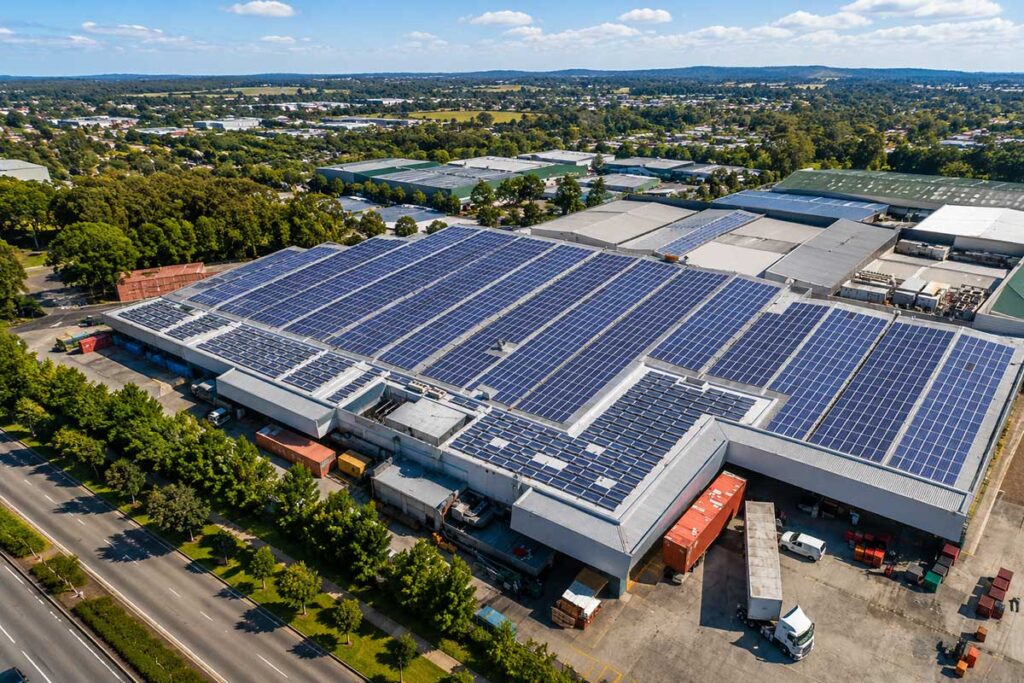
“This is how we power up all those untapped acres of rooftops without solar.”
“Commercial and industrial solar represents the generation capacity of ten of Australia’s biggest coal-fired power plants.”
“We congratulate the government for listening to the people actually building this industry, from property owners and retailers to the installers and developers who told us, in detail, where the current settings were holding back investment.”
“Our members put their real project experience on the table, and today’s announcement shows that voice has been heard.”
Under the changes, new installations and expansions of existing systems up to 1 MW will be eligible for upfront, deemed certificates rather than the progressively priced Large-scale Generation Certificates that currently apply above 100 kW.
Eligible systems will also retain a five-year deeming rate through to 31 December 2030, rather than facing the annual step-down that applies to smaller systems as the scheme winds down.
“For a small or medium business, the difference between an upfront, certain incentive and a progressively priced one can be the difference between a project stacking up and one that doesn’t,” Mr Potter said.
“Removing that uncertainty means more small and medium businesses will install bigger solar systems, lower energy bills, and receive real savings that strengthen margins, competitiveness and create more jobs.”
The SEC’s report identified the commercial and industrial segment between 100 kW and 30 MW – commonly known as the “missing middle” – as suppressed by a policy gap between the small-scale and large-scale renewable energy schemes.
Raising the SRES cap was the first of five reform priorities the report put to government, alongside a proposed national taskforce to progress the remaining barriers within six months.
Mr Potter added that the change would ease investment risk and accelerate regional deployment.
“This will enable businesses looking to install solar to permanently slash electricity bills and create jobs internally and across the solar and storage supply chain as more mid-scale projects move ahead,” he said.
The SEC said the reform also adds to the pipeline of renewable generation that has helped place downward pressure on wholesale electricity prices in recent years, a trend expected to continue as more mid-scale solar comes online.
DOWNLOAD THE REPORT: https://bit.ly/4vWI6A0
ENDS
Media Contact
Email: media@smartenergy.org.au
Phone: +61 448 972 192
Website: www.smartenergy.org.au
About the Smart Energy Council
The Smart Energy Council is the peak independent membership body representing Australia’s renewable energy industry. We are a not-for-profit organisation and registered charity, advocating on behalf of our members and the wider industry for strong energy policy, increased investment, energy security and sustainable industry growth. Our work spans residential, commercial and industrial distributed energy resources (DER), including solar PV and battery storage, rooftop solar, electrification, electric vehicles and smart transport, renewable manufacturing, large-scale renewable energy, electricity grid development and emerging energy technologies. We represent our members’ interests nationally and internationally, including across the Asia-Pacific region.
If your organisation operates in the renewable energy sector, become a member to support our work, strengthen our collective voice and help shape the industry’s future.
Share on socials