
SEC News

Less politics, more clean energy: Snowy 2.0 is too important to play political football

The Smart Energy Council has urged all sides of politics to stop playing political games with Australia’s energy transition, following today’s announcement by Climate Change and Energy Minister Chris Bowen and Finance Minister Katy Gallagher regarding updated costs and schedules for Snowy 2.0.

The reality is that Snowy 2.0 is a project owned by both past and present governments, Smart Energy Council Chief Executive David McElrea said, initiated and signed off under former Energy Minister Angus Taylor and inherited by the current Labor Government following the 2022 election.

“If you strip the partisan politics from the discussion around Snowy 2.0, the core question becomes simple: is this long-duration storage project worth completing?” Mr McElrea said.

“Our answer is an unequivocal yes.”

“Snowy 2.0 will be the largest clean power generator in Australia – providing 2,200 MW of dispatchable capacity and 350,000 megawatt-hours of large-scale storage. That is the equivalent of putting a household battery into almost every home in Australia.” 

“It will underpin reliable, low-cost power for major industrial engines like the Tomago aluminium smelter, which directly employs over 1,000 people and relies on secure domestic energy to produce Australian-made manufacturing materials.”

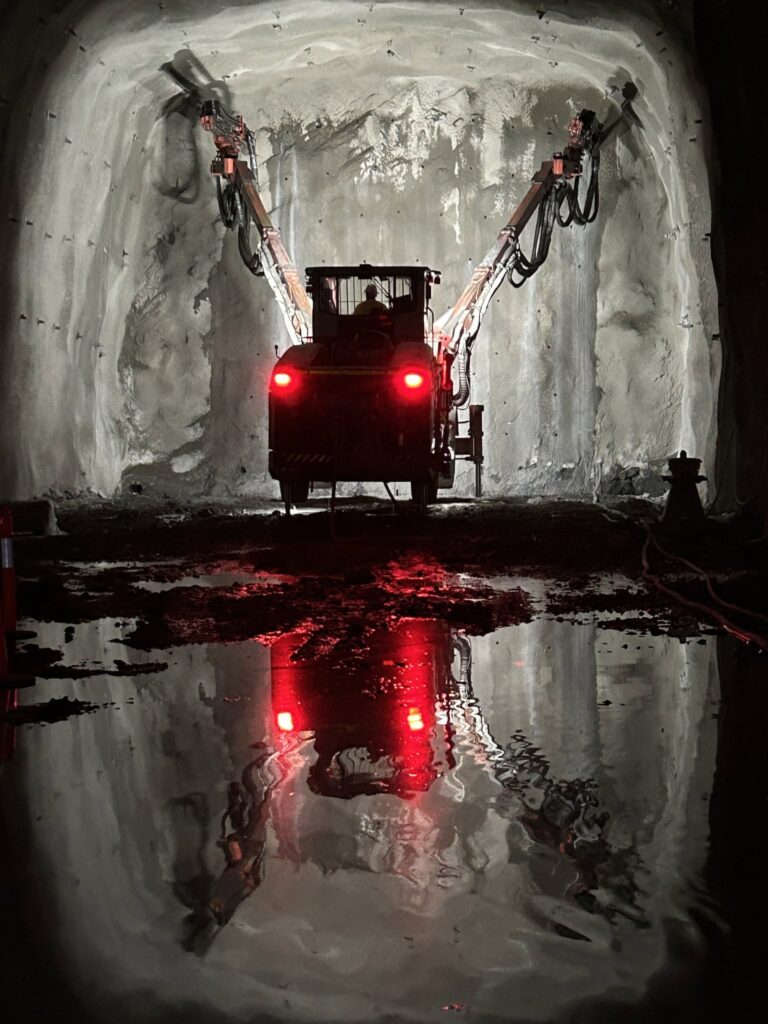
The Smart Energy Council noted that while budget pressure and construction delays on mega-infrastructure projects are frustrating, abandoning critical storage infrastructure at 65% tunnelling completion would be a disaster for power prices, grid reliability, and industrial confidence.

“Blame games don’t build power stations,” Mr McElrea added. “The simple truth is that no one is building new coal-fired power plants, and nuclear energy is a slow, multi-billion-dollar distraction that won’t deliver a single electron for at least 15 to 20 years.”

“Solar, wind, battery storage, and hydro are the present and the future of Australia’s grid. While mega-projects carry unique engineering challenges, the lesson here isn’t to stop building – it’s that Australia must accelerate the deployment of firmed renewable energy, transmission, and storage.”

“It is critical that governments, industry, and planners work together to build clean energy infrastructure faster, smarter, and more efficiently. Our manufacturing sector, our regional economies, and our climate targets depend on it.”

Media contact:

editor@smartenergy.org.au | 0448 972 192

Related Posts

Smart Energy Council thanks Scott Hamilton for his service

Australia backs plan to double the world’s solar homes to 300 million by 2030

Contact Ben Lai

Smart Stewardship

Chair: Darren Johannesen

Meeting Frequency: Every 12 Weeks

Sector Scope

  • Recyclers
  • PV Manufacturers
  • Product stewardship participants

Policy Scope

  • Stewardship policy
  • Recycling frameworks
  • Circular economy initiatives

Technology Scope

  • Solar
  • Batteries

Topics Scope

  • Recycling pathways
  • Product stewardship schemes
  • End-of-life management
  • Industry obligations
  • Sustainability initiatives

Smart Global

Chair: Richard Neumann

Meeting Frequency: Third Monday of every second month except December

Sector Scope

  • Importers
  • Exporters
  • Investors
  • International project managers

Policy Scope

  • International trade
  • Market entry
  • Export facilitation
  • Tariff and non-tariff barriers

Technology Scope

  • Smart energy technologies
  • Climate technologies

Topics Scope

  • Renewable Energy Council Asia Pacific
  • Export opportunities
  • Trade missions
  • Trade and investment agreements
  • Green Economy agreements
  • Global Climate
  • International partnerships
  • Investment opportunities

Smart Transport

Chair: Rhiannon Evans

Meeting Frequency: Every 12 Weeks

Sector Scope

  • Transport technology providers
  • Light and Heavy Electric Fleet operators
  • Charging infrastructure businesses

Policy Scope

  • EV policy
  • Charging infrastructure
  • Transport electrification
  • Network integration
  • Incentives 

Technology Scope

  • Electric vehicles
  • Charging infrastructure
  • Fleet technologies
  • Distribution Network

Topics Scope

  • Rapid Expansion
  • Interconnections
  • Regulations and Standards
  • V2X

Smart Manufacturing

Chair: Rod Scott

Meeting Frequency: Every 12 Weeks

Sector Scope

  • Local manufacturers
  • Technology developers
  • Component suppliers
  • Emerging technologies

Policy Scope

  • Supply Chain
  • R&D
  • Manufacturing Incentives
  • CEFC

Technology Scope

  • Solar
  • Storage
  • Electronics
  • Software
  • Critical materials

Topics Scope

  • Expanding local manufacturing
  • Export opportunities
  • Supply chains
  • Local content
  • Investment attraction
  • Industry capability

Smart Large-scale

Chair: John Welch

Meeting Frequency: Every 8 Weeks

Sector Scope

  • Large & utility scale developers
  • Asset owners
  • Investors
  • EPCs

Policy Scope

  • NEM Review
  • Capacity Investment Scheme
  • Planning Regulation

Technology Scope

  • Solar
  • Storage
  • Wind
  • Transmission

Topics Scope

  • Interconnection
  • Development
  • Financing
  • Energy Wholesaling
  • Planning Regulation

Smart Consumer

Chair: Sohaib Mohammed

Meeting Frequency: Every 8 Weeks

Sector Scope:

  • Installers
  • Retailers
  • Wholesales
  • Service providers

Policy Scope

  • Consumer Energy Resources (CER) Rebate programs
  • Accreditation
  • Local regulations

Technology Scope

  • Solar
  • Battery storage
  • Energy retail
  • Distributed network technologies

Topics Scope

  • Compliance obligations
  • Training and workforce issues
  • Regulations 
  • Consumer protection
  • Energy retail developments
  • Virtual Power Plants (VPP)
  • Industry best practice

Contact Thornton de Voy

Contact Yuan Fang

Contact Ivan Chelvathurai

Contact Nigel Morris

Contact Charlie Caruso

Contact Darren Johannesen

Contact Jessica Hampshire