
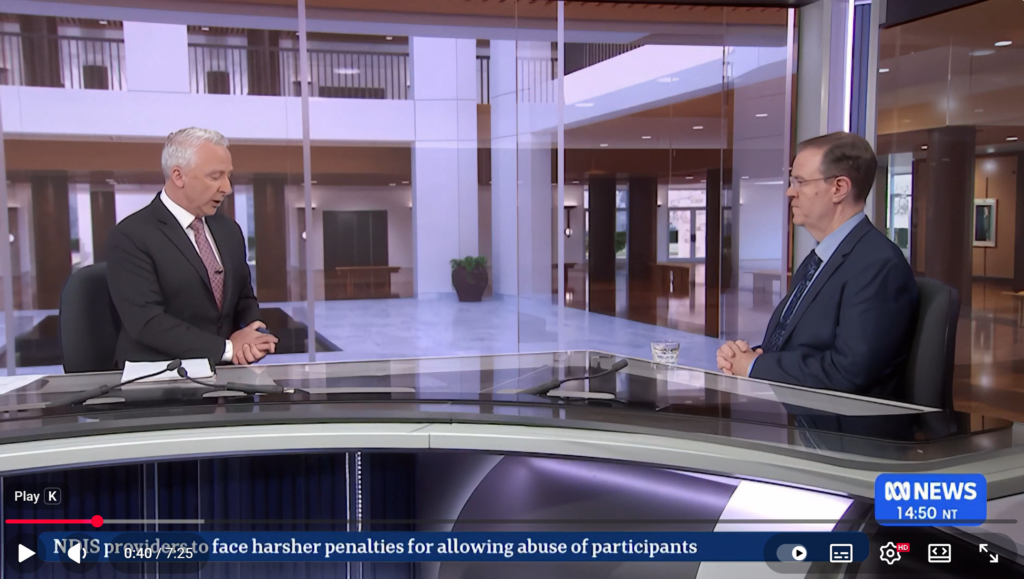
This video features an interview with John Grimes, Chief Executive of the Smart Energy Council, who had just appeared at a nuclear inquiry in Parliament House.
Key points from the discussion:
Impact of the Nuclear Debate: Grimes claimed that the promotion of nuclear energy “does enormous damage” to the 50,000 people in the renewable energy sector. He stated that jobs and investment are under threat today, with the offshore wind industry being “scared by what the opposition is is proposing”. Grimes views the nuclear debate as an “anti-renewables push in a new form” and a “real attack on the renewable energy industry”.
Coalition’s Energy Plan: Grimes criticized the Coalition’s nuclear plan for providing “very little detail,” consisting only of a two-page media release in a 1,200-word document, while concurrently attacking renewable energy. He also suggested that if nuclear power comes online (estimated to be 2035 and beyond), it would necessitate shutting down solar on the seven to nine million Australian households with rooftop solar, or curtailing solar or wind farms to make room for it.
Baseload Power: Grimes described baseload power as “inflexible,” similar to a coal-fired power station that is turned on and cannot be turned off, producing energy even when “no one needs any energy at all”. Nuclear power is similar, as it can be throttled down but not turned off. He argued that this inflexible load struggles to meet demand that changes with the seasons and time of day.
Cost of Nuclear: When discussing the cost, Grimes called nuclear power “eye-wateringly expensive,” citing a single reactor coming online in the UK at a cost of $31 billion.
Energy Solution: Grimes suggested that with a vast geography like Australia, solar and wind can provide power through the day and night, with the gaps filled by energy storage, referred to as “energy firming”. He argued that focusing on getting “as much energy storage onto the network as quickly as possible” would reduce prices, help with the cost of living, and reduce carbon emissions.
Modeling Costs: Grimes addressed a challenge from Ted O’Brien regarding the Smart Energy Council’s estimated all-up cost of $600 billion for the Coalition’s plan. Grimes said they could only model what the Coalition tabled, which was a two-page press release and a 1,200-word document. He stated that the Coalition is asking for a “massive investment of taxpayer money” without providing the details Australians deserve.
UK’s Nuclear Experience: Regarding the UK, which has nuclear power as a significant part of its story, Grimes noted that all existing nuclear plants providing 15% of the UK’s energy will be phased out by 2030. He cited the example of one UK plant under construction that was announced in 2007 and was originally promised to be operational by Christmas 2017 but is now unlikely to be online before 2031. Grimes used this to contrast the claim by Mr. O’Brien and Mr. Dutton that Australia could get a “whole new first generation of its kind in a brand new jurisdiction by 2035”.
Climate Targets: Grimes praised the UK’s recommendation for an 81% reduction of carbon emissions by 2035. He stressed the importance of ambitious targets, noting that all governments need to table their updated 2035 targets before November of next year. Grimes also used the analogy of overheating under a blanket to describe the carbon blanket around the atmosphere, noting that carbon stays in the atmosphere for up to a thousand years.