
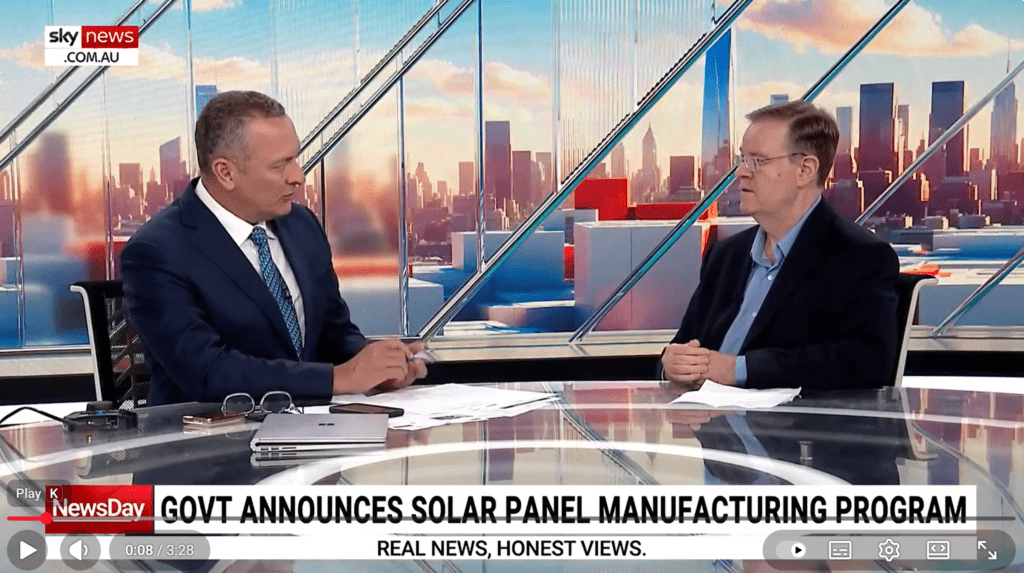
The video discusses Australia’s renewable energy transition, the role of nuclear power, and the future of electric vehicles (EVs).
Renewable Energy Investment and Challenges
Investment in utility-scale renewables dropped significantly from $6.5 billion in 2022 to $1.5 billion in 2023. The previous policy driving renewables, the Renewable Energy Target, ended in 2020. In 2023, the government implemented the Capacity Investment Scheme to build 34 GW of new renewables and energy storage, which is about half of Australia’s total generation fleet. This is a major construction effort planned between the present and 2030.
Challenges in the renewable energy transition include:
Slow Planning Process: In places like New South Wales, the planning process for projects such as wind farms can take over three years for approval. This delay is considered insufficient for a transition needing speed and scale.
Transmission Lines and Social License: Managing the “social license” is critical, particularly concerning transmission lines through farming and regional areas where communities may not want them.
Community Engagement: The industry must engage with communities and offer benefit-sharing, such as lower electricity rates for hosting the infrastructure. Solar and wind power are variable and require a buffer of storage, like pumped hydro storage (e.g., Snowy 2.0) and big batteries, to make power available on demand for the entire economy.
Nuclear Power: While nuclear power is an “amazing technology” relied upon in places with little land and no renewable resources, it “really doesn’t make much sense” for Australia. Nuclear power is projected to come online in the late 2030s. It is considered the most expensive option, costing approximately $350 per megawatt hour, compared to $45 per megawatt hour for solar and wind. Building a nuclear power plant could cause power bills to triple or quadruple in price.
Electric Vehicles (EVs) The transition to EVs is expected to happen “quicker than people think”. New technology entering Australia could allow for charging a vehicle to almost 700 km of range in 10 minutes. Battery swapping technology is also available. The cost of EVs is decreasing and is expected to “push the old petrol cars” out of the market. The government is planning to double the capacity of superchargers/fast chargers over the next year.