
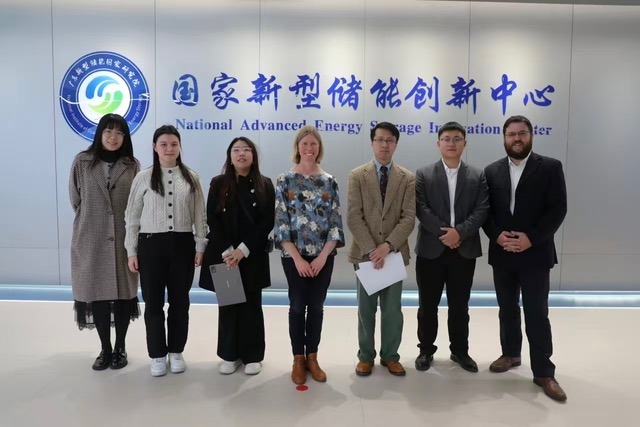
The race to unlock Vehicle-to-Grid (V2G) technology in Australia has taken a major step forward following a high-level international study tour led by the Smart Energy Council (SEC) and the Renewable Energy Council Asia-Pacific (RECAP).
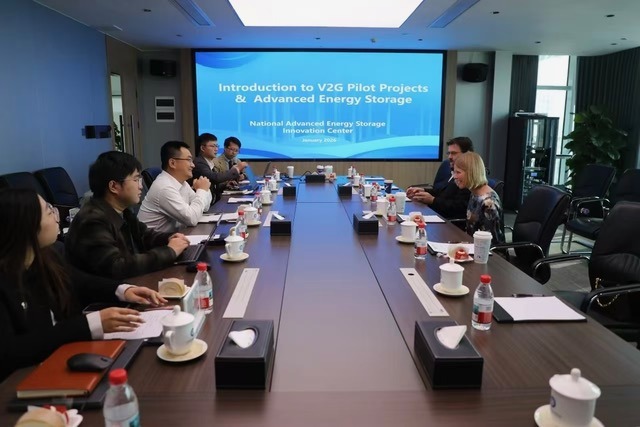
The five-day mission across China’s battery and energy innovation hubs focused on addressing the critical technical, regulatory and commercial barriers preventing large-scale V2G deployment in Australia. The delegation was led by Steven Ducat, Senior International Advisor at the SEC, and included SEC member Portia Rooney, Director of Net Zero Engineering Solutions, as the final leg of Ms Rooney’s Auto Skills Australia Churchill Fellowship.
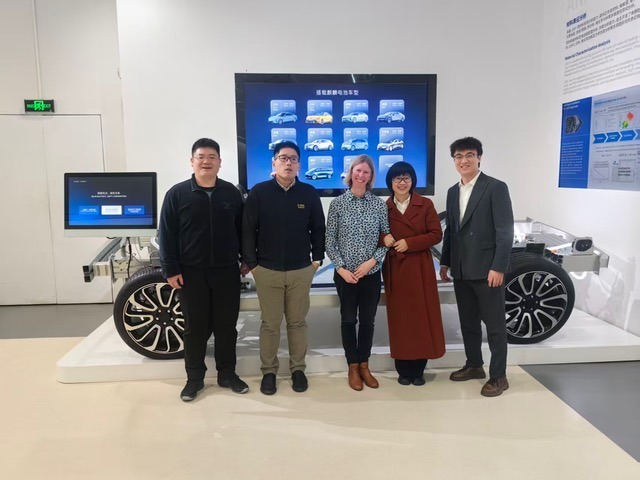
Rather than a conventional site visit, the tour centred on strategic, solution-focused engagement with global battery manufacturers, research institutions and policymakers, with a particular emphasis on resolving warranty constraints and accelerating grid integration standards.
Two Major Strategic Outcomes
Advancing a pathway to V2G battery warranties
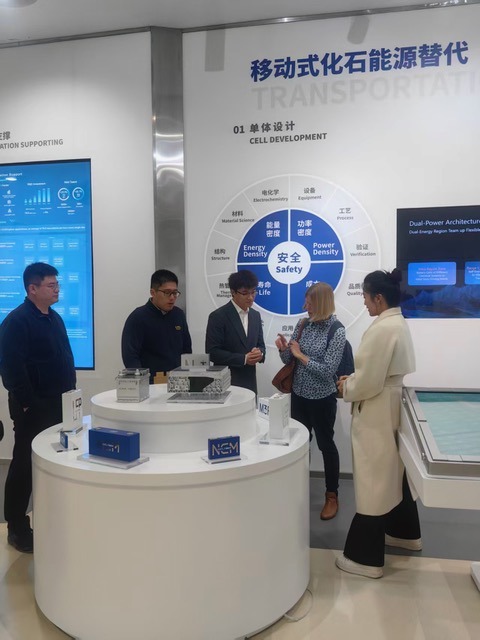
At the headquarters of global battery manufacturer CATL in Ningde, the delegation engaged in detailed discussions on the primary commercial barrier to V2G rollout in Australia: electric vehicle battery warranty restrictions.
These discussions have progressed towards the development of a comprehensive Australian V2G Pilot Program. By leveraging Australia’s highly volatile energy market as a real-world “stress test”, the program aims to generate the operational battery performance data required by original equipment manufacturers (OEMs) to confidently support V2G-compatible warranties in the Australian market.
Establishing a direct R&D and standards pipeline
The SEC has also formalised a new research and development partnership with the National Institute of Guangdong Advanced Energy Storage (NIGAES), following the signing of a Memorandum of Understanding (MOU) at the Investment NSW–Guangdong Joint Economic Meeting in Guangzhou.
This partnership establishes a direct channel for technical collaboration on energy storage innovation, grid integration standards and manufacturing alignment, linking Australian market demand with one of China’s leading national energy storage innovation centres.
From manufacturing facilities in Ningde to policy development in Australia, the Smart Energy Council is working to build the international partnerships required to scale V2G deployment and unlock the potential of electric vehicles as distributed energy assets.
The initiative supports Australia’s ambition to transform its growing EV fleet into one of the world’s largest virtual power plants, strengthening grid resilience, lowering energy costs and accelerating the transition to net zero.
ENDS
For more information on the Churchill Fellowship:
🔗 https://www.churchilltrust.com.au/fellow/portia-rooney-sa-2025/
Media Contact
Email: media@smartenergy.org.au
Phone: +61 448 972 192
Website: www.smartenergy.org.au
About the Smart Energy Council
The Smart Energy Council is the peak independent membership body representing Australia’s renewable energy industry. We are a not-for-profit organisation and registered charity, advocating on behalf of our members and the wider industry for strong energy policy, increased investment, energy security and sustainable industry growth. Our work spans residential, commercial and industrial distributed energy resources (DER), including solar PV and battery storage, rooftop solar, electrification, electric vehicles and smart transport, renewable manufacturing, large-scale renewable energy, electricity grid development and emerging energy technologies. We represent our members’ interests nationally and internationally, including across the Asia-Pacific region.
If your organisation operates in the renewable energy sector, become a member to support our work, strengthen our collective voice and help shape the industry’s future.