
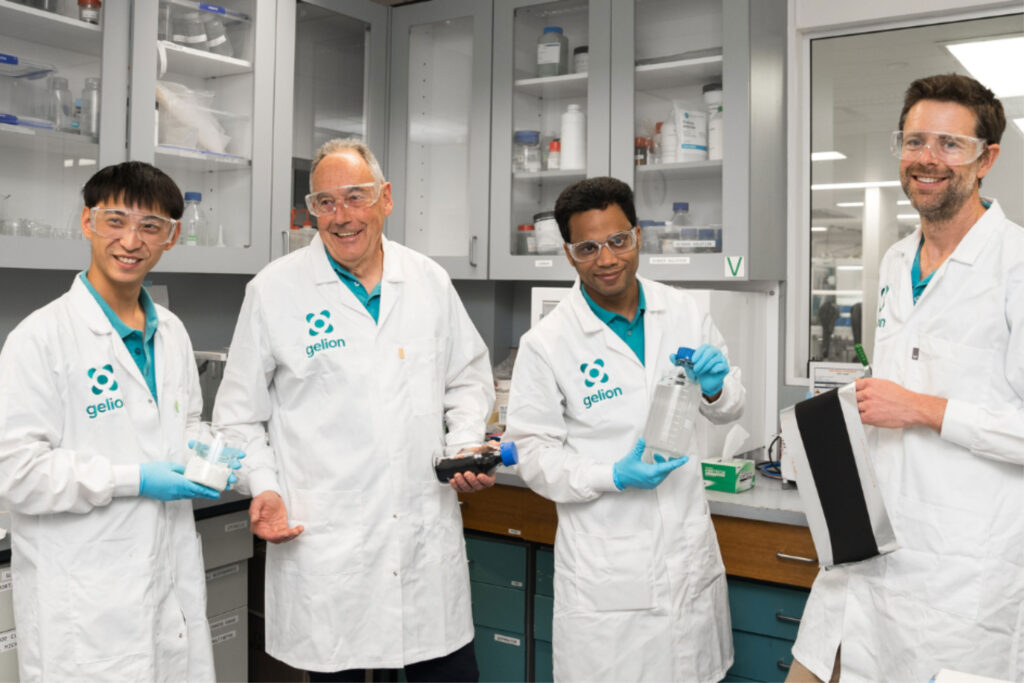
Australian‑founded battery innovator Gelion has entered a three‑year collaboration with Nissan Technical Centre Europe and the University of Oxford to advance solid‑state lithium‑sulfur battery development.
The project, known as CoRe SoLiS (Cost effective, Resilient Solid state Li S), begins in June 2026 and is supported by 2.4 million pounds in Innovate UK funding, including 1.6 million pounds awarded to Gelion’s UK subsidiary.
The initiative focuses on integrating Gelion’s Nano Encapsulated Sulfur (NESTM ) cathode into next generation solid‑state cells. The aim is to develop safer, more durable and more affordable battery technologies that can support the transition to electrified transport and renewable energy systems.
Benefits for the Energy Sector
Solid‑state batteries are widely recognised for their potential to improve safety, energy density and cycle life. They replace flammable liquid electrolytes with solid materials, which can reduce thermal risk and enable more compact, higher performing systems. Despite this potential, commercialisation has been limited by cost, manufacturability and material constraints.
The CoRe SoLiS project addresses several of these challenges by combining solid‑state design with a sulfur-based cathode that avoids the use of nickel, manganese, cobalt and phosphate. These minerals are expensive, geographically concentrated and subject to supply chain volatility. Sulfur, by contrast, is abundant, low cost and widely available.
Advancing a More Sustainable Materials Pathway
Gelion’s NESTM technology stabilises sulfur at the nanoscale to overcome historical issues with power output and cycle life. This enables sulfur to function as a high-performance cathode material while maintaining the benefits of low cost and broad availability.
Key advantages include:
- Reduced reliance on critical minerals
- Lower material and manufacturing costs
- Compatibility with existing global production lines
- Suitability for high power and fast charge applications
- Alignment with emerging anode technologies such as lithium metal and hard carbon
These characteristics support the development of more sustainable and resilient battery supply chains, particularly for countries seeking to reduce exposure to constrained mineral markets.
Role of Nissan and Oxford
Nissan contributes extensive experience in automotive grade solid‑state battery development, ensuring that the project aligns with real world performance, safety and manufacturability requirements. The University of Oxford provides leading research capability in solid‑state materials and cell integration, helping to address technical risks and accelerate progress.
The project also supports the development of a stronger UK based battery ecosystem, complementing Nissan’s EV36Zero program in Sunderland.
Relevance for Australia
Although the project is based in the United Kingdom, it highlights the global competitiveness of Australian originated battery innovation. It demonstrates how Australian research can contribute to advanced materials development and support international efforts to build more secure and sustainable energy systems.
The work also aligns with Australia’s broader ambition to move further up the battery value chain by developing high value intellectual property and advanced manufacturing capability, rather than relying solely on raw mineral exports.
Independent Analysis from Longspur Capital
A recent Longspur Capital research report provides additional context on the potential impact of Gelion’s sulfur cathode technology. The report outlines how Nano Encapsulated Sulfur (NESTM) addresses the long-standing polysulfide shuttle issue that has historically limited lithium sulfur batteries. Longspur notes that Gelion’s cathode delivers energy density comparable to high performance NMC chemistries while also offering competitive power delivery, charging speed, cycle life and low temperature performance.
The report highlights that Gelion’s cathode material has already been proven in prototype coin cells using both lithium ion and sodium ion electrolytes and anodes, demonstrating its potential as a drop-in replacement within existing slurry and coating manufacturing processes. Longspur also emphasises sulfur’s abundance and its lower exposure to geopolitical concentration compared with cobalt, nickel and phosphate.
According to the analysis, NESTM-based cathodes can materially reduce both material and manufacturing costs. Longspur estimates that at scale, cells produced with Gelion’s cathode could be significantly cheaper than NMC cells manufactured in China, supporting stronger energy security outcomes for Western markets. The report also notes that the chemistry is compatible with emerging technologies including sodium ion and solid-state systems, providing a pathway for continued performance improvements.
Looking Ahead
Gelion is targeting commercial prototype deliveries in FY27. The outcomes of the CoRe SoLiS project will inform future scale up and commercialisation pathways for solid state lithium sulfur batteries, with potential applications across electric vehicles, defence, aviation, consumer electronics and stationary energy storage.
Supporting a More Affordable and Resilient Battery Future
By combining sulfur’s material advantages with solid state performance and safety, the CoRe SoLiS collaboration aims to deliver a battery platform that is safer, longer lasting, more affordable and less dependent on constrained mineral supply. This work contributes to the broader goal of developing scalable, sustainable and resilient storage technologies capable of supporting the next phase of global electrification.
-ENDS-
Media Contacts
Disclaimer: The above content has been provided by the featured member and is shared for information purposes only. Publication does not imply endorsement by the Smart Energy Council. Any questions regarding the information or claims contained in this communication should be directed to the member organisation.